







The Hunger Games will be back on our screens later this year, with a new prequel movie about the origin story of Woody Harrelson’s Games winner Haymitch Abernathy. Taking its lead from author Suzanne Collins, this movie will effectively change how Haymitch’s victory came about, placing the character in a whole different light.
On November 20, fans of the franchise will be able to see how the mentor of Katniss Everdeen came to become a legend of Panem, as well as a cynical veteran of the Hunger Games plagued by post-traumatic stress disorder and afflicted by alcoholism. That’s the day when Sunrise on the Reaping hits cinemas.
In Woody Harrelson’s stead, rising star Joseph Zada will play Haymitch in the movie, which is set 24 years before the original Hunger Games trilogy. The franchise’s previous movies are among the best of Harrelson’s career, in part thanks to his compelling performances onscreen. It’s to be hoped that this prequel does those performances justice.
For many fans, Haymitch Abernathy is the best character in The Hunger Games, so playing with his backstory is a risky business. But Sunrise on the Reaping’s new perspective on his stint as a tribute adds fresh depth to the character, while drawing parallels between his younger years and those of the heroic tribute he goes on to mentor.
The Hunger Games Is Retconning Haymitch’s Origin Story In Sunrise On The Reaping

In The Hunger Games, Haymitch describes his victory as a lucky break born out of an act of quick thinking. He’s also portrayed simply as a former Games winner who’s descended into drunken cynicism after decades living in the Capitol, seemingly dining out on his success. It’s only after Katniss enters the scene that he becomes politicized.
By contrast, Sunrise on the Reaping reveals how Haymitch won the 50th Hunger Games in detail, while connecting his entrance into the Games with a personal attack on a loved one. His victory has wider political implications in the context of a resistance movement against President Snow, too.
What’s more, Haymitch’s alcoholism and PTSD isn’t just the consequence of eking a soulless existence in the Capitol, advising other tributes. It’s the result of a harrowing family tragedy in the aftermath of his victory at the Games, as President Snow demonstrates the full extent of his tyranny.
Sunrise On The Reaping Reveals Haymitch Was Political From The Start

As we see in the second trailer for Hunger Games: Sunrise on the Reaping, Haymitch Abernathy is far from just an apolitical cynic dining out on his Games triumph. His personal antagonism with President Snow extends far beyond a superficial dislike. In fact, the prequel will show us that Haymitch was politically engaged from a very young age.
Another key character in the movie will be Plutarch Heavensbee, the leader of the rebel forces in the Hunger Games trilogy. This time around, Jesse Plemons takes over the role from Philip Seymour Hoffman.
Other characters returning from the original movies will also be played by younger actors, including President Snow, Caesar Flickerman, and Effie Trinket, who’ll be played by Ralph Fiennes, Kieran Culkin, and Elle Fanning, respectively. While Flickerman and Trinket will play a secondary role in the film, Snow will still be the villain-in-chief, whom Plutarch is already working against in secret.
Haymitch will get to know Plutarch as a young camera operator working on the Games, beginning a longstanding political alliance that will be revived as the narrative arc of the original trilogy nears its crescendo. Sunrise on the Reaping makes clear that Haymitch was already a rebel long before he got to know Katniss.
The seeds of dissent are sown with his entrance into the Games as a young man, and flourish with the full-scale rebellion that takes place in Mockingjay. The Hunger Games: Sunrise on the Reaping may be retconning Haymitch Abernathy’s origin story, but in doing so it lays the basis for the character’s later transformation.
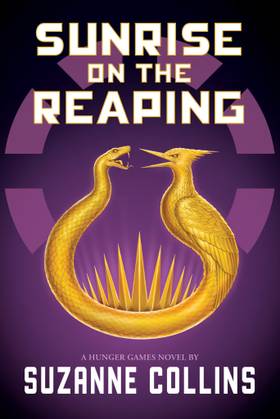
- Publisher(s)
-
Scholastic Press
- Genre
-
Sci-Fi, Dystopia, Young Adult, Fantasy, Adventure
- Number of Pages
-
400
- ISBN#
-
9781546171461
- Author(s)
-
Suzanne Collins