






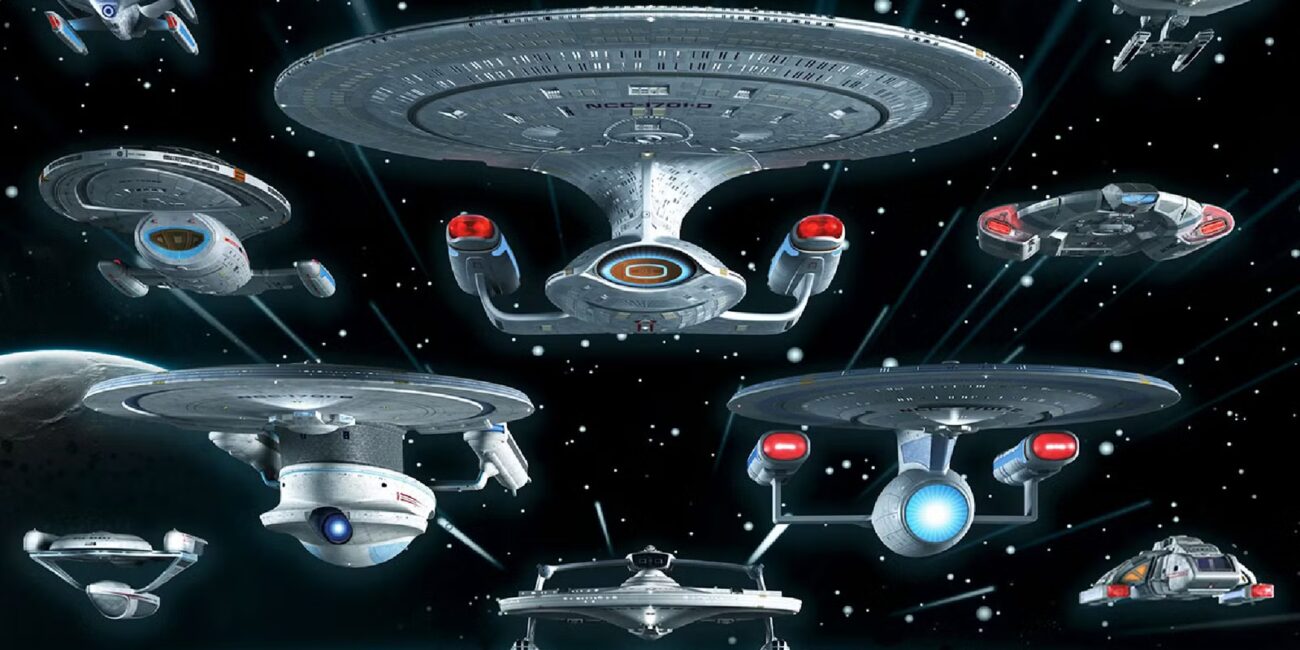
Since 1966, Star Trek has made a name for itself as thoughtful, utopian sci-fi often (especially at first) made on a budget. However, that budget has often spurred the franchise’s creators to new heights of creativity, especially when it comes to the various starships that populate Gene Roddenberry’s universe.
Rejecting the logic of aerodynamics (fair in a universe where most advanced species construct their ships directly in space), Star Trek is known for its unique starships, often inspired by the cultures of the species aboard.
There are countless fantastic ship designs in Star Trek lore, but we’re looking for the absolute best of the best. These are the ships that both immediately spark the imagination and flawlessly convey their narrative function – from warships that instantly seem threatening to bizarre, alien vessels that promise the arrival of near-unrecognizable lifeforms.
USS Enterprise NCC-1701 (Refit) | Star Trek: The Motion Picture
The USS Enterprise has to appear on this list. The ship was initially designed by Matt Jefferies and Roddenberry, and given a fan-favorite redesign by Andrew Probert and Richard Taylor for the big screen – a ‘retrofit’ that expanded the saucer section and smoothed out the initial design for a sleek facelift.
An aviation artist, Jefferies deliberately designed the Enterprise in opposition to the rocket-obsessed sci-fi of the time, however there’s also a touch of Roddenberry’s humanism in imagining the ship functions and living quarters as so fully distinct. The ship is unusual but graceful, with a symmetry that quickly became one of Roddenberry’s rules for Federation ships (e.g. no odd numbers of warp nacelles.)

The Enterprise doesn’t look biological, but there’s something statuesque about it, with a hopeful ‘head’ pointed out into space. The ship takes the traditional ‘flying saucer’ concept and makes it friendly, with a design that communicates forward motion whether the ship is actually moving or not.
The tiny windows on the Enterprise‘s saucer section communicate a sense of scale, while the warp nacelles bring to mind submersibles, subconsciously communicating the Enterprise‘s exploratory purpose.
Klingon Bird-of-Prey | Star Trek III: The Search for Spock
Originally designed for the Romulans, this insectoid ship was ultimately given to the Klingons, the most famous example being the HMS Bounty commandeered by Kirk in Star Trek IV: The Voyage Home. The ship was designed by Industrial Light and Magic’s Nilo Rodis-Jamero and David Carson, overseen by Leonard Nimoy himself.
Everything about the Bird-of-Prey says ‘bad guys,’ from the vulture-like stoop to the bug-eye-like domes on top. Wingtip guns aren’t just a constant threat (the antithetis of the questing Enterprise), but implicitly take over the entire purpose of the wings, making this ship feel like it’s just looking for the next target. Finally, the green sheen gives it an unhealthy pallor that has no easy reference point in terms of real building materials.
But while the Bird-of-Prey doesn’t look attractive, it IS perfectly designed for its purpose. No-one seeing this ship approaching would expect anything other than incoming fire.
Borg Cube | Star Trek: The Next Generation

The Borg Cube is a masterpiece of villain design – a ship that looks like nothing else the franchise’s heroes have encountered, glowing with eldritch light and with no clear delineation between mechanical function and living space. It’s a creation of Dan Curry and Rick Sternback.
Created by Maurice Hurley, Richard James and Rick Sternbach, it looks like an evil artifact left behind by a long-dead civilization – except they’re not long dead, and there are tens of thousands of them cramped inside.

The predatory hivemind of the Borg Collective is dedicated to uniformity, and the Borg Cube exudes this concept to menacing perfection. There’s no sense of direction traveled, no clarity of the ship’s purpose, and not a single hint of comfort.
However, the Borg Cube isn’t just a sealed box – it’s a mess of scaffolding and pipes that speak to function above all else – an uneven lattice that suggests the work ethic and dedication to function of a termite hive.
The Borg Cube is a box that drags you inside and keeps you there, and its scale is only fully revealed when a more traditional ship is unlucky enough to come within range.
Romulan D’deridex | Star Trek: The Next Generation
Looking like the Klingon Bird-of-Prey’s big brother, the D’deridex went down in history thanks to The Next Generation‘s ‘Neutral Zone,’ where its grand decloaking officially brought the Romulans back to the galaxy. It was designed for the series by Andrew Probert.
The bird-like ‘beak’ adds some weight to the ship’s design, adding a ponderous quality to the appearance of a predatory bird. Unlike the Bird-of-Prey, it’s clearly not meant for fast, frantic attack, carrying the portent of not just battle, but war.

The hollow in the center is alien, with the ship’s enclosing design drawing attention to the negative space, and making it the subject of fan speculation (can smaller ships hide inside?) Like the Enterprise, tiny windows give the impression of a floating city, but also billions of eyes regarding the next potential target.
While the Enterprise‘s saucer section has a hopeful, questing pose, the D’deridex’s living section looks more like a Spartan helmet that’s already seen its share of conflict, and is ready for more.
Honorable Mentions

- U.S.S. Cerritos – This California-class ship plays with the classic design of the Enterprise, but makes the saucer section the heart of the ship. Add a zippy paint job and it’s a compelling twist on some of Star Trek‘s most iconic imagery.
- Species 8472 Bioship – Emerging from Fluidic Space with hatred for all other forms of life, Species 8472’s ship looks like a dagger made out of bone or an armored squid, conveying its disturbing nature as a ‘grown’ vehicle.
- Vulcan Surak-class – Elegant and arrogant, the Surak-class ship is a soft-edged ‘T’ balanced within a ring-like warp nacelle, looking more like abstract sculpture than a vehicle. It has the poise expected of the logical Vulcans, complete with a subtle sense of ‘we’re better than you.’
- Tarellian ship – The last refuge of a refugee race, the Tarellian ship projects peace and harmlessness. Built around a glowing violet orb and devoid of sharp edges, the ship invites compassion – an emotion denied its crew in the episode’s commentary on humanitarian crises.
Nero’s Narada | Star Trek (2009)

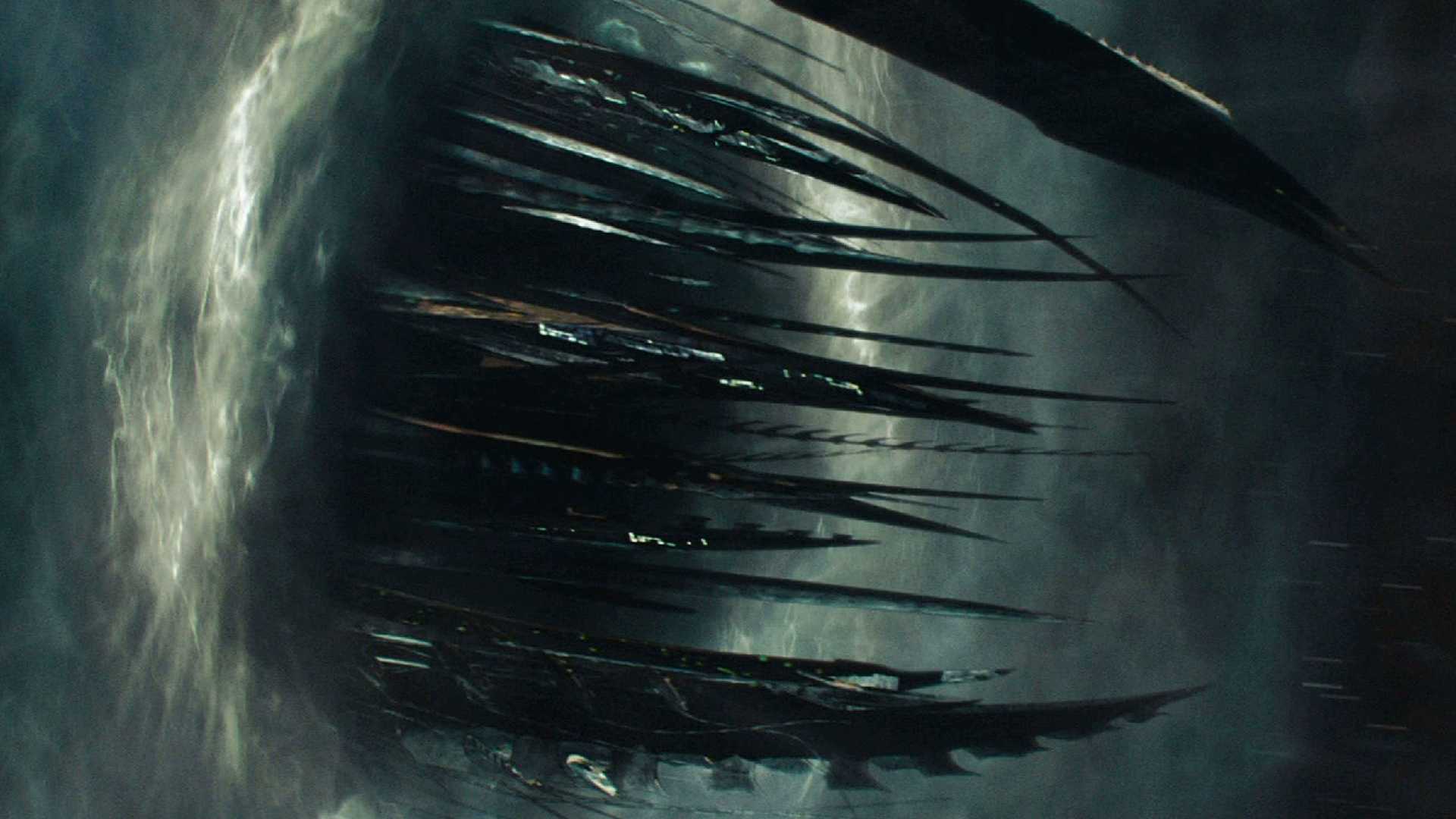
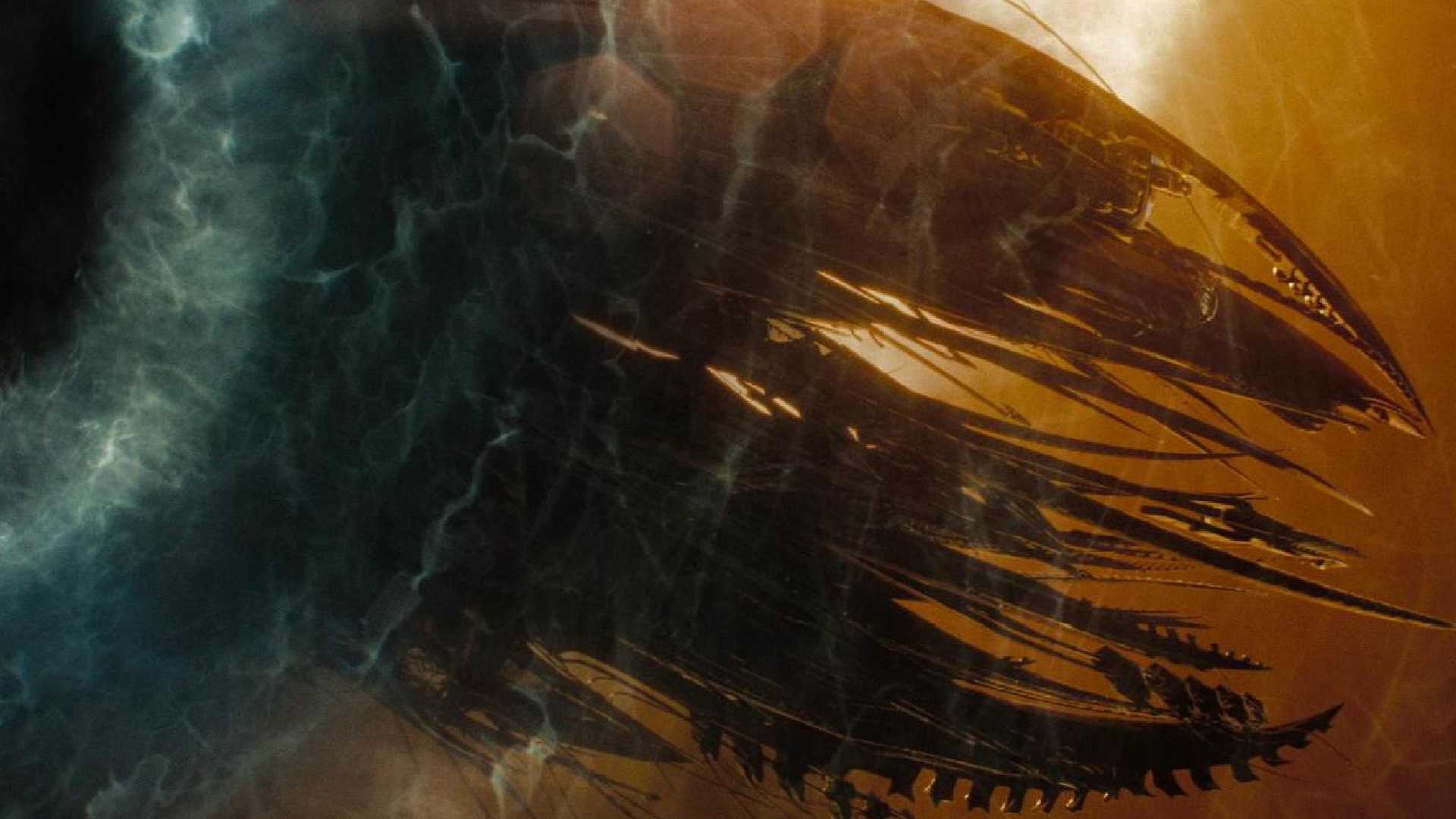
A former mining vessel retrofitted with Borg tech by the vengeful Romulan Nero, the Narada is a spiked anti-flower that looks like some kind of horrific sea urchin. It’s not just that the Narada extrudes a flurry of blades, but that those blades are even serrated at their tips, like simply stabbing his targets wouldn’t be vicious enough.
A character dedicated to violent revenge, it’s fitting that Nero’s ship isn’t just malicious, it’s aimed at the galaxy. Every metallic talon zeroes in on the same spot, as if Nero’s hatred is mutating the ship around him, dragging it in around his projected rage. Designed by James Clyne, the Narada puts an emphasis on asymmetry, speaking to the presence of an individual villain inside, rather than the latest representative from one of the franchise’s recurring species.
Those are the five Star Trek ship designs we’re calling out as truly perfect – let us know in the comments below whether you agree with our list, and what other ships should appear.

- TV Show(s)
-
Star Trek: The Original Series, Star Trek: The Animated Series, Star Trek: The Next Generation, Star Trek: Deep Space Nine, Star Trek: Voyager, Star Trek: Enterprise, Star Trek: Discovery, Star Trek: Short Treks, Star Trek: Picard, Star Trek Lower Decks, Star Trek: Prodigy, Star Trek: Strange New Worlds, Star Trek: Starfleet Academy
- Cast
-
William Shatner, Leonard Nimoy, George Takei, Nichelle Nichols, Deforest Kelley, James Doohan, Walter Koenig, Jonathan Frakes, Patrick Stewart, Michael Dorn, Marina Sirtis, Gates McFadden, Brent Spiner, LeVar Burton, Wil Wheaton, Avery Brooks, Nana Visitor, Rene Auberjonois, Alexander Siddig, Cirroc Lofton, Armin Shimerman, Colm Meaney, Terry Farrell, Kate Mulgrew, Robert Beltran, Roxann Dawson, Jeri Ryan, Robert Duncan McNeill, Robert Picardo, Ethan Phillips, Garrett Wang, Jolene Blalock, Connor Trinneer, Dominic Keating, Scott Bakula, Linda Park, John Billingsley, Anthony Montgomery, Chris Pine, Zachary Quinto, Simon Pegg, Zoe Saldana, Karl Urban, John Cho, Chris Hemsworth, Benedict Cumberbatch, Anton Yelchin, Idris Elba, Sonequa Martin-Green, Mary Wiseman, Doug Jones, Anthony Rapp, Wilson Cruz, Oyin Oladejo, Emily Coutts, Jess Bush, Christina Chong, Anson Mount, Ethan Peck, Rebecca Romijn, Michelle Yeoh
- Created by
-
Gene Roddenberry