






It’s striking just how many gibberish languages have carved out an important place in pop culture, with plenty of iconic characters spouting nonsense and becoming legends in the process. From Muppets showcasing recipes through a mock-Scandinavian dialect to beloved Pokémon making their feelings known through their name alone, there’s often far more to these fictional languages than meets the eye.
It’s true that made-up languages are nothing new, and writers like J. R. R. Tolkien put a lot of time and energy into crafting genuine dialects like Elvish. But all the attention to detail put into things like Klingon or Dothraki, other movies, television series, or game franchises simply opt to make up their languages with total, untranslatable gibberish.
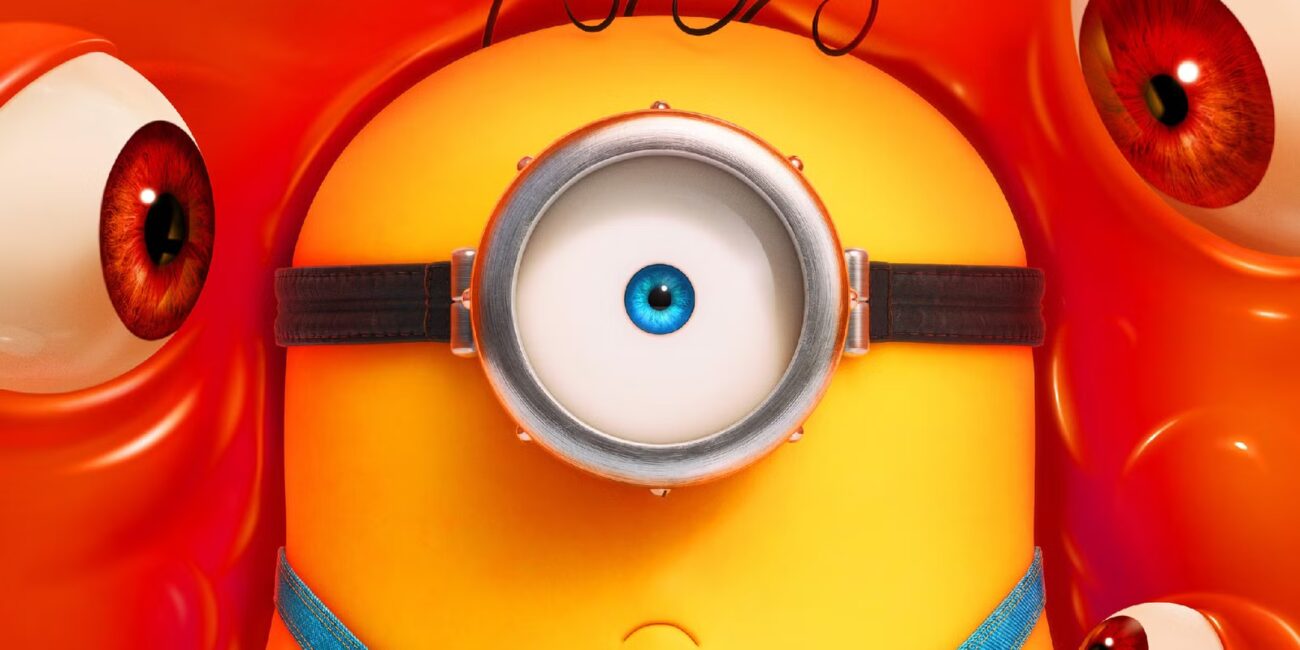
With Minions & Monsters hitting theaters, audiences are once again confronted with the absurdity of Minionese, where only the odd word like “Banana” can be understood among their fast-paced, rhythmic baby talk. But they are definitely not the only iconic characters to become known worldwide while speaking total gibberish, as the history of nonsense languages in fiction is surprisingly vast and varied.
Penguinese (Pingu)

The Swiss stop-motion series Pingu boasts devoted fans around the globe who follow the hilarious antics of the titular anthropomorphic emperor penguin and his family. Communicating entirely in Penguinese, or Pinguish, this uninterpretable language leaves audiences to infer from context exactly what is being said or felt.
Occasionally, Penguinese does offer some semblance of understandable clues, such as loanwords like milk or fish from English, Artz from German, or caca from Spanish. Other phrases, like thank you, are taken from at least three different languages, hinting that there may be different dialects of Penguinese, much like in our world.
Penguinese even has its own writing system, borrowed from the real-life Cyrillic and Hebrew alphabets, with Pengu’s pal, Robbie the seal, even using the Latin alphabet at one point. The gibberish language of Pingu even caused some controversy, much like with the Teletubbies; parents in the 1990s were worried that its nonsensical utterances could delay children’s speech development.
Chef Speak (The Muppets)

The Muppets‘ creator, Jim Henson, came up with some truly iconic characters, with the likes of Kermit, Miss Piggy, and Grover being particularly well-loved. But it’s the more minor characters whom he imbued with some of the wildest characteristics, as the Swedish Chef’s unique way of speaking melds the phonology and prosody of Scandinavian speech patterns.
In hilarious comedy sketches, the Swedish Chef often sings gibberish in the kitchen, with nonsensical lyrics that always end in “Bork, bork, bork!” This commentary occasionally slips in the odd English word just to give viewers a clue about what he’s talking about, before he uses things like firearms, sports equipment, or hand tools to chaotically finish his recipe.
The Swedish Chef isn’t the only gibberish-speaking character in The Muppets; viewers will be familiar with Beaker’s nervous, high-pitched squeak. His “Mee-mee-mee-mee” is every bit as iconic as anything else from this variety series, as the long-suffering assistant of Dr. Bunsen Honeydew powerfully adds to the show’s enduring legacy.
Mr. Bean’s Mumbling (Mr. Bean)

Comedy legend Rowan Atkinson truly struck gold with Mr. Bean, as this iconic comedy character transcends cultures and languages to connect with audiences globally. As well known in a small Vietnamese village as he is in California, the everyday awkwardness of Mr. Bean and his uniquely peculiar mannerisms make him stand out.
Mr. Bean does not speak any specific language and instead communicates through mumbled words and the occasional utterance of “Teddy,” the name of his beloved knitted toy. This lack of language means Mr. Bean has more in common with silent comedy stars like Charlie Chaplin or Buster Keaton than any of the other iconic British characters of the 1990s.
In playing the character, Atkinson instead focuses on physical comedy, facial expressions, and visual timing to ensure his humor is understood all over the world. But it’s more than just slapstick stunts that turned him into an icon, as the awkward way Bean interacts with those around him possesses a childlike innocence that means you can’t help but root for him, no matter how ridiculous a situation he’s landed himself in.
Simlish (The Sims)

Simlish is the made-up language spoken by the characters in The Sims. This game series mimics real life as players design their characters and set them off into the world to work, fall in love, and get into practically any absurd situation a person can conjure. In doing this, Sims communicate through nonsense sounds, made-up words, and over-the-top expressive speech.
Simlish isn’t a real language, but the way it relies on tone, expression, and gestures makes it feel like you can understand what they are talking about. Within the game, it’s clear when a Sim is happy, angry, flirting, or arguing, but even if players feel like they start to recognize the occasional Simlish word, it was never developed as a functioning language.
However, this hasn’t stopped many people from having fun with Simlish, as stars like Katy Perry have even sung in the nonsense language. Having re-recorded her track “Last Friday Night” in Simlish, Perry stunned fans by performing in the gibberish (via GamesRant) live in concert in 2025, before jokingly apologizing to the audience and saying, “You had to be there.”
Pokémon Language (Pokémon)

The means by which Pokémon communicate are far more complex than they first appear. The most common iteration is essentially gibberish, as Pokémon simply repeat their own name over and over with different intonations, and this appears to replicate language in a way that humans can understand.
However, there are also many other language models carried out by Pokémon across the anime and games. Fans of the original animated series will surely think of Meowth, the Team Rocket member who taught himself to talk and walk upright to impress a female named Meowzie. What’s striking is that there doesn’t seem to be anything particularly special about Meowth, and it appears any sufficiently motivated Pokémon could speak if it put in the effort.
Other speaking Pokémon include Psychic-types, who use telepathy to make themselves understood by humans and others around them. A notable example is Mewtwo, the legendary cloned creature who acted as the antagonist of Pokémon: The First Movie from 1998. But for all these exceptions, the most common phrase associated with Pokémon language is strikingly simple: “Pika pika, pike-chew.”
Minionese (Despicable Me)

Few nonsense languages have entrenched themselves in the public consciousness quite like Minionese. Audiences were first introduced to these yellow capsule-shaped creatures in Despicable Me back in 2010, but they have since become the focal point of a billion-dollar spin-off franchise in their own right, with releases like Minions, Minions: The Rise of Gru, and Minions & Monsters, all while talking total gibberish.
Minionese is voiced by Minions co-creator Pierre Coffin, who serves as the primary voice for all Minions. It appears to be a polyglot language that borrows heavily from all over the place, as Minions pepper their frantic ramblings with seemingly random words from English, French, German, Spanish, Italian, and more.
While no non-Minions are ever seen speaking this strange dialect, characters like Gru appear to at least understand it. Love it or hate it, nobody can deny that Minionese has struck a chord with viewers and is a major component of the Illumination series’ unquestionable success. The Minions come from a long line of gibberish languages across media, but they just might be the most successful examples of saying a lot and meaning nothing.