





Few superheroes have changed as dramatically on screen as Captain America. Since debuting in comics in 1941, Steve Rogers has become one of Marvel‘s most recognizable heroes, embodying courage, perseverance, and a belief that doing the right thing matters even when it is difficult. Yet getting that character right on screen took far longer than many realize.
Captain America’s live-action journey stretches from movie serials of the 1940s to modern MCU timeline blockbusters. Along the way, filmmakers repeatedly reinvented the character, sometimes staying faithful to the source material and sometimes discarding it almost entirely. Different actors, changing special effects technology, evolving audience expectations, and shifting ideas about patriotism all influenced how the Star-Spangled Avenger was portrayed.
Early versions barely resembled the comic-book hero at all. Others attempted to recreate his classic appearance as closely as possible. By the time the Marvel Cinematic Universe arrived, Captain America had transformed from a difficult character to adapt into one of the franchise’s defining heroes. Looking back at every major live-action incarnation reveals not only how Captain America evolved, but also how superhero adaptations themselves changed over the decades.
Dick Purcell’s Captain America

The first live-action Captain America appeared in the 1944 movie serial starring Dick Purcell, and comic-book fans would barely recognize him today. Rather than Steve Rogers, this version was District Attorney Grant Gardner. The familiar origin involving a frail young man transformed by the Super-Soldier Serum was removed entirely.
The costume retained a few recognizable elements, including the classic stars-and-stripes chest design and the trunks from Captain America’s earliest comic appearances. However, much of the outfit was simplified. The wings disappeared from the mask, chainmail became ordinary cloth, and the boots were replaced by high shoes. The costume was actually gray, white, and dark blue because those colors photographed better on black-and-white film.
Perhaps most surprisingly, Captain America’s iconic shield was absent. Instead, he carried a gun. Even though the serial was released during World War II, Nazis never appear, despite being Captain America’s most famous comic-book enemies at the time. Bucky was missing as well. It was Captain America in name, but little else.
Reb Brown’s Captain America

Captain America returned to television in 1979 with Reb Brown taking over the role. This version moved even further from the comics while embracing the style of late-1970s action television. Steve Rogers was reimagined as a former Marine and traveling artist whose father had earned the nickname “Captain America” through his patriotic government service.
After an attack nearly kills him, Rogers survives thanks to the FLAG formula (Full Latent Ability Gain), a super-steroid derived from his father’s research. The costume looked unlike anything seen in the comics. Instead of a traditional cowl, Rogers wore a motorcycle helmet decorated with an A and painted wings. The suit featured vertical stripes running over the shoulders, red gloves and boots, and a transparent shield with red detailing.
The sequel, Captain America II: Death Too Soon, refined the design. The stripes stopped at the torso, while the helmet became even larger and gained physical wings. The character’s motorcycle became particularly memorable, eventually inspiring later comic-book versions of Captain America to ride one as well.
Matt Salinger’s Captain America

The 1990 Captain America film finally brought audiences much closer to the source material. Matt Salinger’s Steve Rogers was once again a frail young man chosen for a government experiment during World War II. In this version, Rogers is a polio survivor whose physical ailments are cured by the supersoldier formula. The movie includes many familiar comic-book elements.
Steve becomes Captain America, battles the Red Skull, disappears after being frozen, and awakens decades later in the modern world. While the film takes numerous liberties with the plot, its broad structure closely resembles what audiences now associate with Captain America. Most importantly, the costume was remarkably faithful.
The bright colors, winged mask, and classic comic-book layout were all present. Although the suit sometimes appeared rubbery and the colors occasionally faded on screen, it looked far closer to Captain America than any previous adaptation. Director Albert Pyun reportedly wanted Captain America to wear the black tactical costume then appearing in comics, but Marvel insisted (thankfully) on preserving the hero’s traditional appearance.
Chris Evans’ First Avenger

When Captain America: The First Avenger arrived in 2011, Marvel finally delivered the version viewers had been waiting decades to see. Chris Evans perfectly captured Steve Rogers’ personality, portraying him as hopeful, selfless, and unwaveringly noble. For the first time, Captain America’s character felt as accurate as his costume.
His initial uniform intentionally resembled the colorful comic-book design. Bright blue fabric, white sleeves, prominent wings on the mask, and a utility belt all reflected Golden Age artwork. During his war-bond tours, the outfit even embraced its exaggerated mascot qualities.
The film also featured Captain America’s original shield-shaped shield before he received the iconic circular version. Later scenes introduced the classic leather jacket worn over the costume, another direct nod to early comic appearances. The result was a version of Captain America who finally looked, acted, and felt like the character readers had loved for generations.
Chris Evans’ 21st Century Captain America

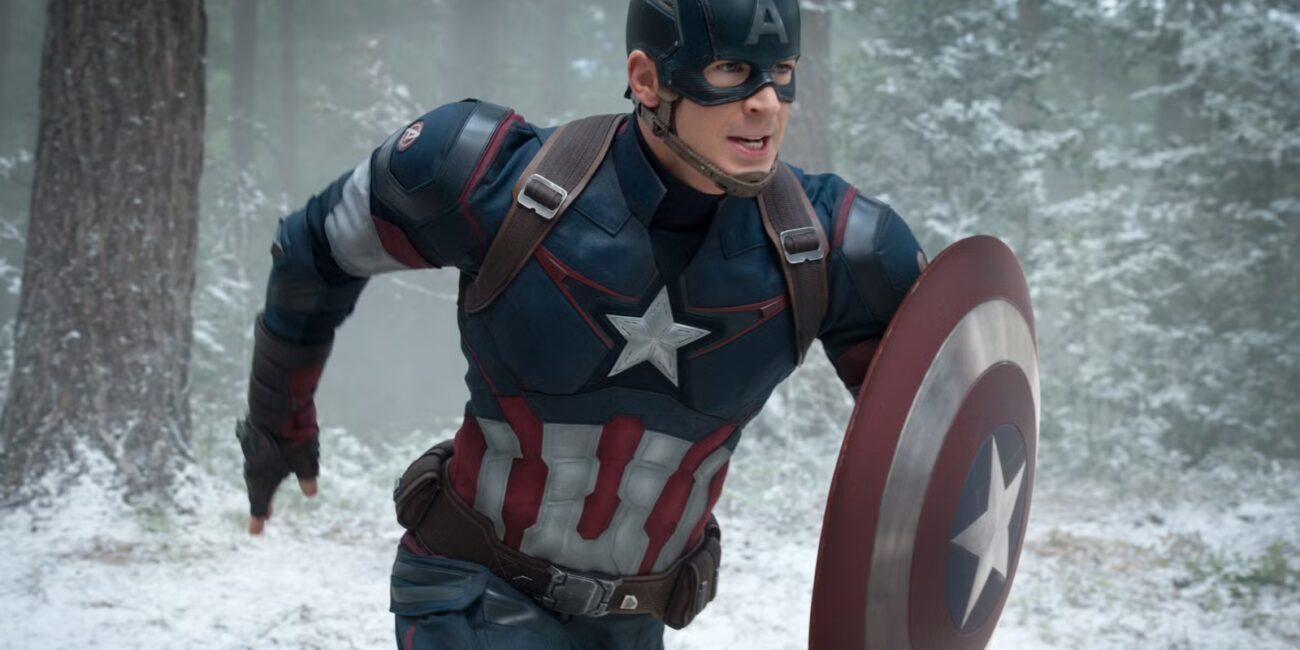
After awakening in the modern era, Steve Rogers underwent his first major evolution. In The Avengers, the costume remained faithful but became more practical and tactical. The bright comic-book styling was toned down without abandoning Captain America’s identity. White sleeves became paneling, the utility belt became more functional, and the wings were painted onto the helmet instead of protruding from it.
Captain America: The Winter Soldier and Avengers: Age of Ultron continued this progression. The blue became darker, the star gained additional detailing, and the suit incorporated more tactical elements. Straps appeared around the shoulders, creating a military-inspired look.
The changes reflected Steve’s situation. No longer a wartime mascot, he was now a modern superhero operating in a complex world. Despite these visual adjustments, Evans maintained the optimism and moral certainty that defined the character. It was a careful balancing act between comic-book iconography and believable modern military equipment.
Chris Evans’ Post-Civil War Captain America

The most dramatic evolution of Evans’ Captain America came after Captain America: Civil War. Following his break from the government, Steve’s costume visibly reflected his changed circumstances. The white stripes and central star disappeared entirely, signaling his separation from official American authority.
The costume’s blue darkened significantly, while additional brown tactical components created a rougher appearance. By Avengers: Infinity War, Steve had grown long hair and a beard, further emphasizing his status as a fugitive operating outside the system. The bright, idealistic hero of The First Avenger had become a battle-worn veteran.
This visual trend continued into Avengers: Endgame. The costume remained heavily muted, with an almost black-blue color scheme. Even the “A” on his cowl became difficult to notice. Importantly, Steve himself never lost his principles. The costume grew darker, but the character remained committed to protecting others. The evolution represented experience and sacrifice rather than cynicism.
Wyatt Russell’s Captain America

The Falcon and the Winter Soldier introduced John Walker as the government’s replacement Captain America, and his costume immediately communicated that something felt wrong. The design superficially resembled Steve Rogers’ suit but featured important differences.
The wings were sleeker, black tactical straps dominated the outfit, and the white elements were largely absent – a signal that Walker lacked Steve Rogers’ purity. Red stripes crossed the torso, also creating a more aggressive appearance. The suit looked professional, but it lacked the warmth and idealism associated with Steve Rogers. That discomfort proved intentional.
Walker initially attempts to live up to Captain America’s legacy but ultimately demonstrates that he is unworthy of the shield. His public execution of a defeated opponent becomes one of the MCU’s most shocking moments and reveals how consumed by anger he has become. The costume’s subtle unease mirrors the character perfectly. It looks like Captain America, but never quite feels like Captain America.
Anthony Mackie’s Captain America

Image via Marvel Studios
Sam Wilson’s transition into Captain America represents one of the most comic-accurate costume upgrades in Marvel history. Inspired heavily by Sam’s Captain America design from the comics, the white-based suit embraces his Falcon heritage while incorporating traditional Captain America imagery.
The most obvious difference is the inclusion of his wing system, which now incorporates vibranium technology. Because Sam lacks the Super Soldier Serum, the wings help level the playing field against stronger opponents. They become an essential part of his fighting style rather than merely a visual flourish.
Throughout The Falcon and the Winter Soldier and Captain America: Brave New World, Sam struggles with the enormous responsibility of following Steve Rogers. Rather than attempting to become a copy of Steve, he eventually finds his own identity as Captain America and gains a more blue-tinged suit. He may be less of a traditional boy scout than Rogers, but his compassion, courage, and determination make him an equally worthy successor.
Civilian Steve Rogers

One of the biggest surprises surrounding Avengers: Doomsday is the return of Chris Evans as Steve Rogers. Unlike previous appearances, Steve is shown in the Doomsday trailer wearing civilian clothing rather than a Captain America costume. He sports the long hair and beard associated with his post-Civil War appearance and wears dark, understated clothing.
Although little is currently known about Steve Rogers’ role in Doomsday, the footage suggests that he has emerged from retirement (and the past) to help face another world-threatening crisis. Despite his age and years away from active heroics, he appears to retain the optimism and leadership qualities that defined him throughout the MCU. Even without the shield, Steve Rogers remains the definitive Captain America.
- Video Game(s)
-
Captain America: Super Soldier
- Latest Film
-
Captain America: Civil War