





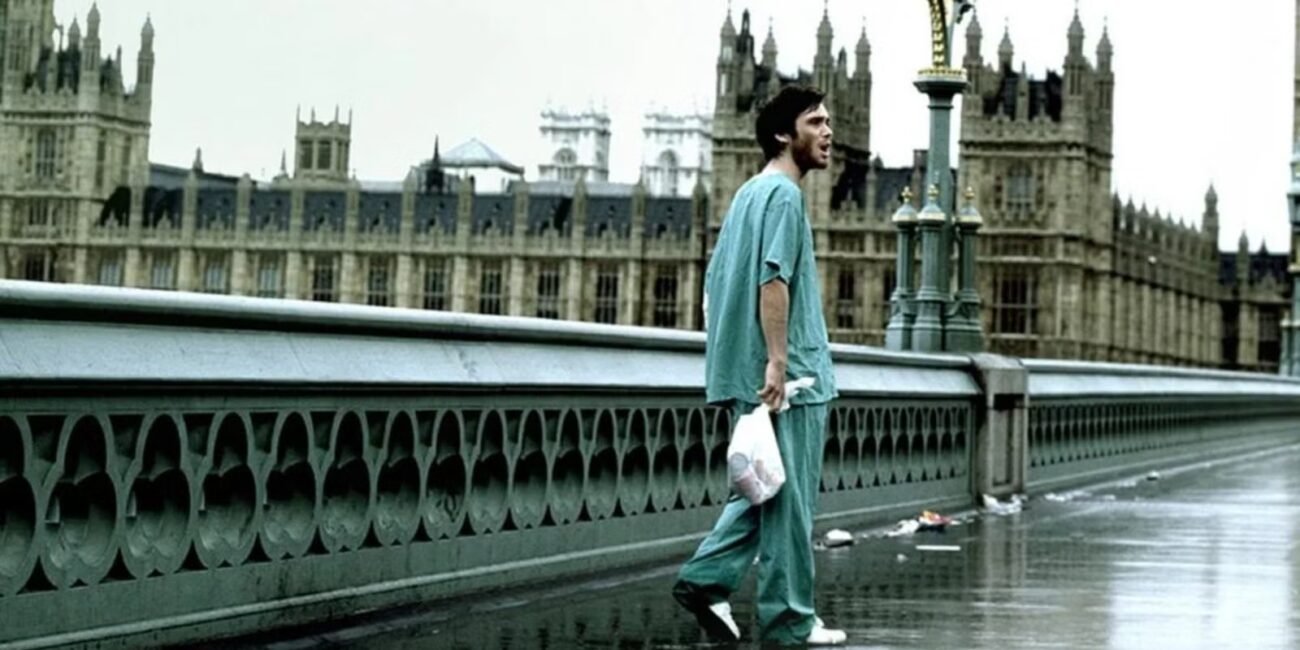
If we’re ranking seven post-apocalyptic movies better than 28 Days Later, we’d better be sure they’re very good movies indeed. Danny Boyle’s spartan post-apocalyptic zombie movie from 2002 is horrifying as it is beautiful, and still holds up not just as one of the great end-of-the-world movies, but one of the best of the 21st century.
Don’t worry, though, if you think there’s nowhere to go but down when it comes to post-apocalyptic films. There are a handful of other standouts, some ranked among the greatest films of all time, and they all present different visions of what happens after the end of the world happens.
Dawn Of The Dead (1978)

10 years after George A. Romero’s ground-breaking Night of the Living Dead came the second film in a franchise which is still ongoing, even into the 2020s. Dawn of the Dead may be the best of Romero’s zombie films, sharpening what made Night of the Living Dead so surprising, and adding in the satire and humor that would go on to define the series.
Dawn of the Dead contains no mention of the events in Night of the Living Dead, save that it takes place after the same zombie apocalypse. At this point, society has collapsed, and millions are dead or reanimated. In Philadelphia, a group of survivors takes up residence in a shopping mall to escape the apocalypse.
With everything they could want, their lives become centered on enjoying all the comforts of the pre-apocalypse world. It’s a biting satire of the consumerist culture of America, and the smart humor and brutal gore are all in concert, making for an immensely satisfying and highly rewatchable zombie film.
The Day After (1983)

The Day After is a TV movie that premiered on ABC, and it was one of the most watched TV programs of all time, with over 100 million people tuning in for the film (via LakelandLedger). The movie hypothesizes a fictional conflict between the United States and the Soviet Union that results in a full-scale nuclear exchange.
The film centers on Dr. Russell Oakes (Jason Robards), who works at a hospital in Kansas City, Missouri, but the typical lives of Russell’s neighbors are also shown throughout the first part of the film. As the movie goes on, troubling news begins to come in of escalating tension between the U.S. and the USSR.
After the rhetoric rises, ICBMs are suddenly launched from both sides, and the people of Kansas City can only watch in horror. The few, like Russell, who make it to safety, return to a decimated world where martial law has been installed by what remains of the government. It’s shocking, upsetting, and one of the few films to plainly show the effects of nuclear war on American citizens.
Nausicaä Of The Valley Of The Wind (1984)

Hayao Miyazaki’s second film does not get as much attention as the rest of his filmography, but Nausicaä of the Valley of the Wind is a moving, thrilling animated adventure that is filled with the anti-industrial and pro-environmental themes that are dotted throughout the rest of his films.
Based on his own manga, Nausicaä of the Valley of the Wind is set a thousand years after a massive nuclear war destroyed civilization and brought an end to most of Earth’s biomes. The survivors end up creating tribe-like kingdoms that barely survive in the shadow of the Toxic Jungle that resulted from the war.
In the poisonous jungle live giant, mutant insects, who have grown to dominate the world much the way mammals did after the dinosaurs died out. Princess Nausicaä tries to find a way to bring peace between the warring kingdoms and the insects, doing so all in Miyazaki’s beautiful animated style with a floral script to match the colorful, desolate world.
Threads (1984)

Threads is an unsettling, difficult-to-watch post-apocalyptic war drama that will reward those who are willing to sit through it. Set in Sheffield, England, Threads primarily follows young couple Ruth Beckett (Karen Meagher) and Jimmy Kemp (Reece Dinsdale), whose lives are about to be set in a terrible direction.
The routine of everyday life in Sheffield is broken up when a nuclear exchange between the U.S. and the Soviet Union heralds nuclear Armageddon for the world. Towns like Sheffield devolve into chaos and panic. Characters we’ve been with are suddenly wiped out, and society collapses in horrific fashion.
We’re then transported years into the future, and the tattered remains of society have warped into a depressed, silent facsimile of what there once was. Threads is an angry film that offers no salvation at its end and will leave you haunted by the sad, ponderous wind down of the Earth after everything is broken.
Children Of Men (2006)

Alfonso Cuarón offers a more modest look at what happens after the apocalypse in Children of Men, when compared to nuclear devastation or the zombie hordes. In Children of Men, the end is brought on not by the arrival of some external horror, but the flicking off of a human switch. Years of global infertility have pushed civilization to the brink of collapse.
In 2027, no human has been born in 18 years, but Theo Faron (Clive Owen), a former activist turned cynic, encounters one of humanity’s last hopes, Kee (Clare-Hope Ashitey), the world’s only pregnant woman. Theo is recruited to spirit Kee across the lines of a war front to a research facility where a cure for infertility may be able to be made from her.
The drab, colorless world belies an amazing, awe-inspiring, distressing story of hope in the face of total nihilism. Cuarón is doing some of his best work in Children of Men with incredible sequences and camera movements that mirror the chaotic, danger-at-every-corner story.
Mad Max: Fury Road (2015)

The greatest of George Miller’s Mad Max movies, Mad Max: Fury Road brought the exceptional, original post-apocalyptic wasteland story to the 21st century and reminded audiences why the original trilogy was so beloved in the first place. Tom Hardy takes over Mel Gibson’s role as Max Rockatansky, a cop turned semi-sane drifter, surviving but not thriving in the post-apocalyptic desert wasteland.
Mad Max: Fury Road is one of the greatest action movies of all time. A forward-moving, non-stop, incredibly choreographed road adventure that you feel in your chest. The insane world of Max Rockatansky is beautifully rendered, and the story of escape and loss is powerfully realized.
There are horse-masked villains, one-armed truck-driving heroines, stables of radiation-free wives willing to do whatever it takes to be free, and an army of pale young boys happy to throw themselves under the wheels of colossal, fire-spewing monster trucks to earn a place in the junkyard version of Valhalla. It’s a glorious, hedonistic, even encouraging vision of a post-apocalyptic world.
28 Years Later: The Bone Temple (2026)

28 Days Later may be the second-best film in the franchise, and possibly the third best. That’s just how strong a horror franchise it is. 28 Years Later: The Bone Temple is the most recent entry and is the second part of 28 Years Later. Unlike Days and the first Years, Bone Temple is directed by Nia DaCosta, not Danny Boyle.
The Bone Temple is a wondrous film, and manages to differentiate itself from both of Boyle’s earlier films, creating something wholly within the series but unique. It’s horrifying at times, with gut-wrenching moments of violence, usually courtesy of Jack O’Connell’s Sir Lord Jimmy Crystal, the self-styled son of Satan.
Ralph Fiennes returns as Dr. Ian Kelson, and his attempts to revive humanity in an Infected named Samson (Chi Lewis-Perry) are astonishing and include some of the most hair-raising and delightful moments in a post-apocalyptic zombie movie since… maybe 28 Days Later.

- Release Date
-
November 1, 2002
- Runtime
-
113 minutes
- Director
-
Danny Boyle
- Producers
-
Andrew Macdonald