




It took only five years after Spider-Man’s first comic book appearance before television shows were produced starring the iconic Webslinger, one of the most beloved superheroes of all time. Without a doubt, Spider-Man has one of the largest, most fascinating (and often strangest) television legacies, both in live-action and in animation. After all, this legacy boasts both pillars of superhero media history and some unique experiments.
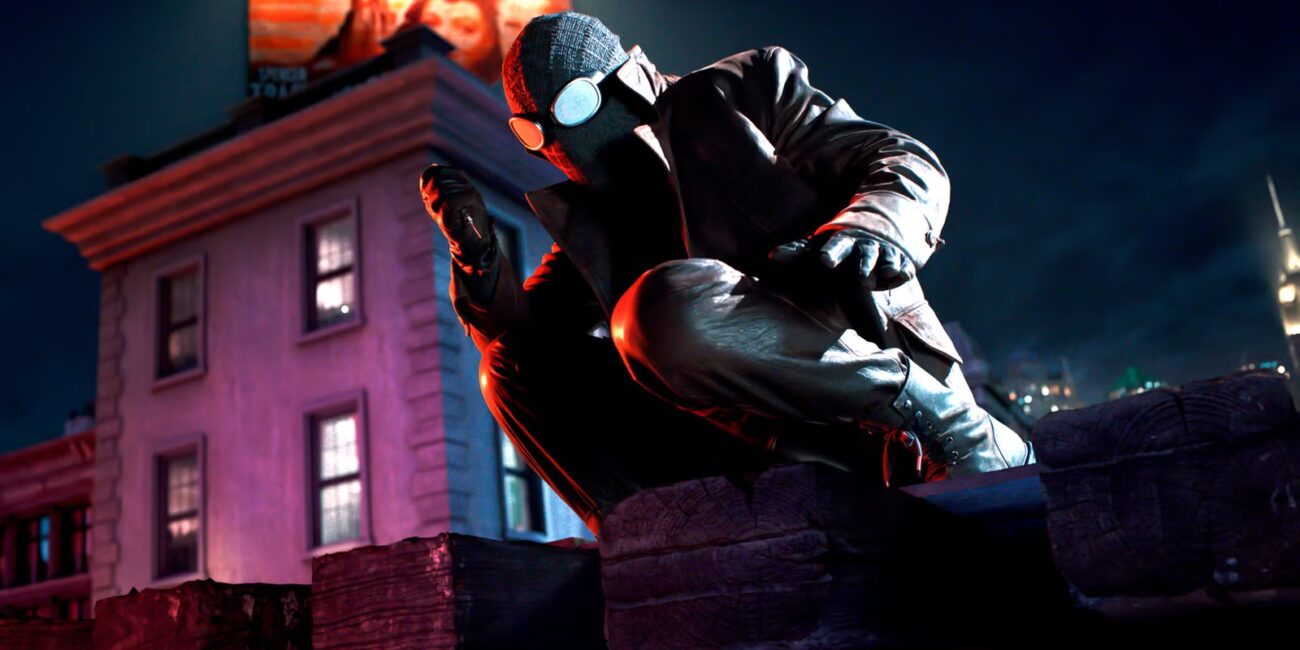
Keeping that in mind, it’s actually pretty difficult to rank the large number of Spider-Man shows, as most have brought something new and unique to the table. Likewise, the spectrum of Spider-Man shows produced over the years is nearly as vast as the Spider-Verse itself. While some projects have leaned into more kid-friendly, Saturday morning cartoon territory, others have gone for more unique executions with serialized drama or unique visual mediums. Case in point, Sony and Amazon’s brand-new Spider-Noir series is undoubtedly one of the darkest television takes on Spider-Man we’ve seen yet.
Now that Nicolas Cage’s Spider-Noir has just joined the ever-expanding lineup of Spider-Man television adaptations, now feels like as good a time as any to try and rank every major Spider-Man television series (from worst to best).
14
Spidey and His Amazing Friends (2021)

Spidey and His Amazing Friends was obviously designed for very young audiences, and to its credit, it succeeds at exactly that. The brightly colored Disney Junior series introduces preschool viewers to Spider-Man through simplified adventures featuring Miles Morales’ “Spin” and Gwen Stacy’s Ghost-Spider alongside Peter Parker himself. By all accounts, it’s a great way for adult fans of Spider-Man to get their kids interested in the Webslinger (while hopefully learning some good lessons along the way).
However, compared to nearly every other Spider-Man show, there isn’t nearly as much depth here (which makes sense).
The stories are extremely repetitive, the action is minimal and watered down for the younger demographic, and the tone is intentionally as light as possible. Again, perfectly understandable given the target audience, though it does make the series difficult to rank compared to all the others with far more dimensions and narrative.
13
Spider-Man (1978)

1978’s live-action Spider-Man series is one of the strangest, most unique, and yet incredibly influential Spider-Man adaptations ever made. Produced in Japan by Toei, the series offered a significant re-imagining of Spider-Man’s entire lore and mythology, particularly by giving him a giant mech called Leopardon. Additionally, this version of Spider-Man was a motorcycle racer named Takuya Yamashiro who gets his powers from Garia, an alien from the Planet Spider.
The classic concept of a hero piloting a giant mech to fight giant monsters very much began with this Spider-Man series, becoming a foundational predecessor for future shows like Super Sentai, Power Rangers, and beyond with more “tokusatsu” shows from Toei. That said, 1978’s Spider-Man series barely resembles the comics, making it one of the least faithful Spider-Man shows to ever exist.
12
Marvel’s Spider-Man (2017)

Marvel’s Spider-Man had the unfortunate job of following 2012’s Ultimate Spider-Man and its four-season run while also competing with growing expectations created by the MCU with Tom Holland’s debut as Spider-Man in 2016’s Captain America: Civil War. Likewise, the series feels rather lacking in heart, with not nearly as much energy in the animation compared to other Spider-Man shows. It did feature some interesting ideas and more recent concepts from the comics, like Spider-Island, Doc Ock’s Superior Spider-Man, and even Disney’s Worldwide Engineering Brigade at Avengers Campus. However, it still struggled to maintain a strong identity overall.
11
Spider-Man and His Amazing Friends (1981)

Spider-Man and His Amazing Friends remains a key nostalgia show for many Marvel fans. The inspiration for the title and having a trio of lead heroes for the aforementioned and more recent Disney Junior series, 1981’s Spider-Man and his Amazing Friends teamed Spider-Man with Iceman and Firestar, one of the biggest on-screen superhero crossovers at the time. Although it’s still a key piece of Spider-Man’s cinematic legacy, it’s pretty dated by modern standards with simpler writing and fairly basic villains. That said, it still has some fun charm.
10
Spider-Man (1981)

Having been released at the same time, 1981’s solo Spider-Man animated series is often overshadowed by Amazing Friends. However, the focus on Peter Parker alone arguably makes for a moderately stronger Spider-Man series. That said, other Spider-Man shows offered higher quality (and a lot more cultural significance).
9
The Amazing Spider-Man (1977)

1977’s The Amazing Spider-Man deserves some solid respect for even attempting a live-action Spider-Man show long before superhero television would come to dominate the mainstream, even if budget issues and limited effects took their toll on the CBS show’s action, making the series more like a detective series than anything else. The show also lacked recognizable villains, the only character from the comics besides Parker being J. Jonah Jameson. Played by Nicholas Hammond, this version of Peter Parker was still very likable with some solid charm.
8
Spider-Man: The New Animated Series (2003)

Spider-Man: The New Animated Series was pretty ahead of its time stylistically (perhaps too far ahead). Using early-CGI animation and visually inspired by Sam Raimi’s Spider-Man movies starring Tobey Maguire, The New Animated series offered serialized drama that was fairly unique for the era. While the animation style was fairly bold and experimental at the time, it hasn’t aged particularly well.
However, Neil Patrick Harris was an excellent Peter Parker, with many still citing his performance as one of the best voices for Spider-Man to this day. Likewise, Harris would eventually voice Peter Parker again in the 2010 video game Spider-Man: Shattered Dimensions.
7
Spider-Man Unlimited (1999)

1999’s Spider-Man Unlimited is somehow ridiculous and ambitious all at the same time. In this incredibly unique series, Spider-Man is sent to Counter-Earth, interacting with human-animal hybrids created by the High Evolutionary, while also being loosely connected to the events of 1994’s Spider-Man: The Animated Series. The series also saw Spider-Man wearing a unique nanotech costume made by Reed Richards to help fight alien symbiotes like Venom and Carnage.
While it was ultimately canceled by Fox due to an inability to compete with Pokémon (which released at the same time), Unlimited’s darker tone and serialized storytelling helped it stand apart from other Spider-Man shows in some pretty memorable ways.
6
Spider-Man (1967)

1967’s Spider-Man remains legendary almost entirely due to its cultural impact. The iconic theme song alone makes it an immortal piece of superhero content that will likely never be forgotten, not to mention how memeable so many scenes have become in recent years.
While the animation itself was extremely limited, the show captured Spider-Man’s personality remarkably well, helping cement the Webslinger as a major mainstream icon with a level of influence and impact reaching beyond comic book readers alone.
5
Ultimate Spider-Man (2012)

2012’s Ultimate Spider-Man began with some pretty divisive reception, especially coming right on the heels of Spectacular Spider-Man’s cancellation. However, its fourth-wall humor, connections and crossovers with the greater animated Marvel Universe, and inspirations from the MCU do make the series a pretty entertaining watch in hindsight, featuring breakout moments and episodes like Spider-Man’s inadvertent team-up with Deadpool, voiced by Will Friedle, or Donald Glover, who voiced Miles Morales.
Additionally, Drake Bell was a solid voice for a teenage Peter Parker who was gradually learning to become a better hero with support from Nick Fury and SHIELD, inspired by the original Ultimate Spider-Man comics by Brian Michael Bendis.