






WARNING: The following article contains spoilers for Spider-Man: Brand New Day and potentially sensitive content related to suicide, depression, and trauma.
Spider-Man: Brand New Day is now in theaters and treating Spidey fans around the world with an intimate, grounded, street-level adventure featuring Tom Holland’s best performance to date as the friendly neighborhood web-slinger.
Brand New Day has received overwhelmingly positive reviews from critics and general moviegoers alike, who have praised the MCU film’s more contemplative take on Spider-Man. A contrast to the multiversal madness of the preceding film, Spider-Man: No Way Home, director Destin Daniel Cretton’s movie opts for a story that finds Tom Holland’s Peter Parker navigating the darkest chapter of his life after everyone who knew who he was, including his best friend Ned and girlfriend Zendaya, forgot he existed.
While featuring epic, stylized action set-pieces and appearances from Marvel Comics legends like The Punisher, The Hulk, and Jean Grey, Spider-Man: Brand New Day proves most successful in its willingness to position issues of mental health in the forefront of its story. This is particularly commendable when considering that the film is a family-friendly superhero movie, aimed to appeal to the masses and rack up billions of dollars in box office totals.
As more and more fans get the opportunity to see Spider-Man: Brand New Day, now is the perfect time to examine the film’s authentic and relevant approach to mental health, the bravery it exhibits to touch on difficult subject matter, and how this reflects a broader, refreshing trend for recent Marvel Cinematic Universe projects.
Overcoming Loneliness Is The Central Theme of Brand New Day

Spider-Man: No Way Home culminated in a moment that forever changed the trajectory of Peter Parker’s life. Doctor Strange’s spell to save the world from multiversal collapse necessitates that everyone lose their memories of Peter. Coupled with the tragic death of his sole parental figure, May, Strange’s memory wipe renders Peter completely alone in the world.
In a recent global press conference for Spider-Man: Brand New Day, Tom Holland spoke about the role loneliness plays as the central theme in the film. “The thing I love the most about the film is that it really represents, or it’s a cautionary tale for the dangers of living a life alone and not having a community, not having friends,” Holland described. “And a lesson that he learned from Andrew’s character in the previous movie is that sometimes the bravest thing that you can do is ask for help. And he is actively ignoring that advice. And it is having a profound effect on his life as a human being.”
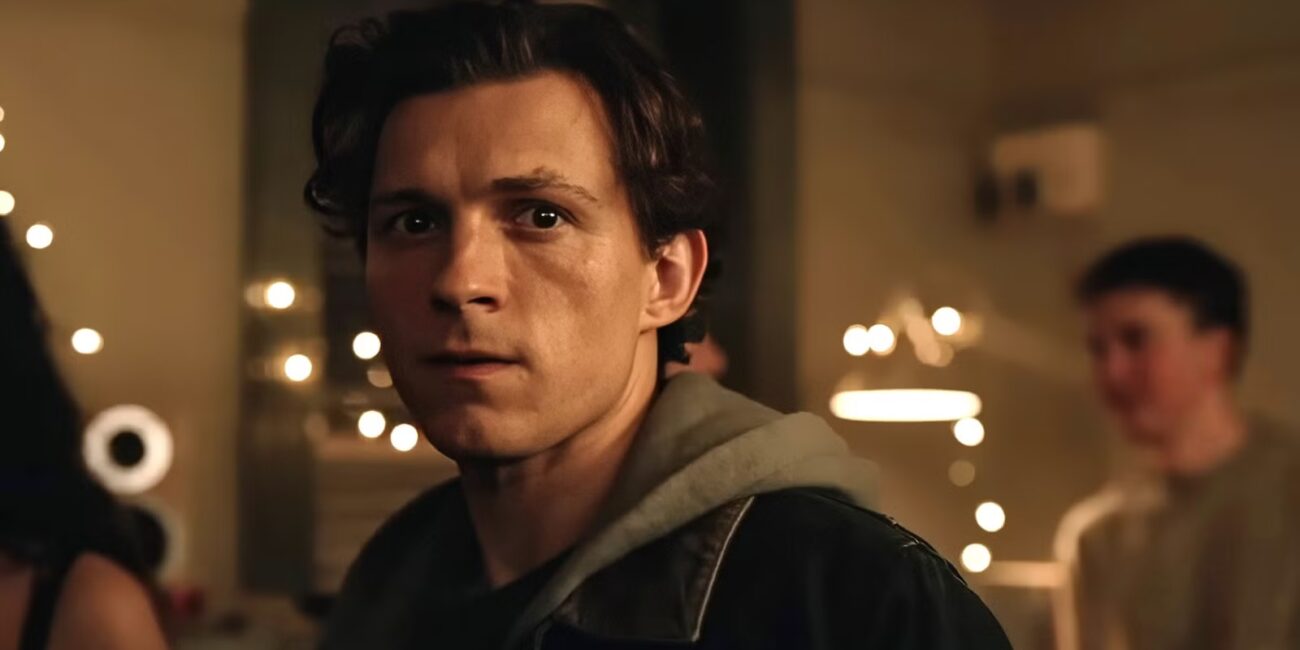
Indeed, as Spider-Man thrives in Brand New Day, Peter Parker wallows in anguish and isolation. The man who defeats crime bosses and receives the key to the city is also the same person who returns every night to a grubby New York apartment, nurses a headache, and scrolls on Instagram to keep up with his former friends’ daily lives from afar.
At a certain point, Peter is aware of the reality of his predicament. But as much as he wishes to rekindle his relationships with Ned and MJ, he realizes that doing so may put them in danger. As such, Peter struggles by himself, failing to integrate advice from Andrew Garfield’s Spider-Man to ask for help while he navigates the most dire period of life.
Tom Holland commented on how Peter’s declining mental health as a result of being isolated from others parallels the experiences of many young people in the real world. “It’s just so true to what young people are going through on a daily basis,” Holland reflected. “So for me, I really kind of dove into this new idea because it just felt so relatable, so prevalent with what’s happening in the world. And I love telling a movie on this scale that is something that I really think will resonate with young people.”
Holland hits the nail on the head. Spider-Man has always been as popular as he is, not because of his cool suit or web-slinging abilities, but because of how relatable of a character he is. Yes, he is a superhero who fights all manner of bad guys, but he’s also just a regular guy, navigating school, jobs, relationships, and more. In centering Peter’s arc around his initial loneliness and eventual overcoming of this isolation by building a relationship with Frank Castle and reaching out to Ned in the final scene, Brand New Day represents a Spider-Man movie at its most relevant and poignant.
Brand New Day Subtly Addresses Suicide

Loneliness unfortunately often accompanies suicidal ideation and behaviors, a connection that Spider-Man: Brand New Day subtly explores in two powerful, yet understated scenes.
The first of these scenes comes relatively early on in the film. After Peter witnesses MJ kiss her boyfriend at a party, he retreats to the streets of New York City. With tears in his eyes, Peter aimlessly swings as he confronts the reality that MJ, the love of his life, is in an intimate relationship. At one point in the scene, rather than swing from building to building, Peter lets himself fall from an immense height as he sticks his arms out and blankly looks up at the sky while falling.
The exact motive underlying Peter’s behavior in this scene is unclear, but it is possible to read this scene as a young man, in the middle of a mental health crisis, contemplating ending his life. Holland’s pained face, teary eyes, and willingness to free fall from a tall building all suggest that, even if his action is not characterized as a suicide attempt, Peter may be reckoning with such thoughts given the sheer amount of pain he is in.
Peter’s free fall is not the only moment in Spider-Man: Brand New Day that touches on suicide. Later in the film, Jean Grey inhabits the mind of Bruce Banner, turning him into The Hulk and using him as a weapon to fight off Spider-Man and The Punisher. As the battle comes to an end, Jean hops out of The Hulk’s mind, but Banner remains in his Hulk form. However, a part of Banner appears to poke through The Hulk’s rage as he hangs on to a cable to prevent himself from falling out of a building. Spider-Man urges The Hulk to hang on, after which the latter looks at the former with a defeated look and lets go of the cable.
Banner’s fall from the building is certainly a more overt depiction of suicidality than Peter’s free fall. In a deleted scene of The Incredible Hulk and through dialogue in The Avengers, the MCU depicted a Bruce Banner, who has resorted to making a suicide attempt in a desperate effort to free himself from the pain of transforming into The Hulk. This moment in Spider-Man: Brand New Day evokes Banner’s prior suicide attempt as he, once again, sees death as the only option to escape from the hell of turning into The Hulk.
Brand New Day And Thunderbolts* Have More In Common Than NYC And Yelena

Spider-Man: Brand New Day is not the only recent MCU movie to position issues of mental health front and center.
Last year, Thunderbolts* served as a cinematic allegory for mental health by focusing on trauma, depression, and the battle against internal darkness, rather than a traditional comic book villain.
Bob’s internal struggle and transformation into The Void reflected the extent to which depression and trauma responses can hijack one’s life, while the film more broadly highlights how suppressing painful memories and grief only amplifies, rather than dampens, difficult emotions. Ultimately, the film offered an uplifting message by conceptualizing recovery from mental health issues as a shared, communal act. Only through the Thunderbolts coming together to support Bob does The Void loosen his grip on Lewis Pullman’s character.
A little over a year later, Spider-Man: Brand New Day similarly makes the bold decision to profoundly explore mental health in the context of a superhero movie. Both Thunderbolts* and Spider-Man: Brand New Day feature epic, superpowered showdowns in New York City, but they are most memorable for couching necessary commentary on mental health in a family-friendly blockbuster.
Suicide, depression, and trauma are difficult topics to speak about, but, if massive movies like Spider-Man: Brand New Day and Thunderbolts* continue to approach them with delicacy and empathy, hopefully more people will be willing to follow the advice of Andrew Garfield’s Spider-Man and ask for help when they need it.
988 offers 24/7 judgment-free support for mental health, substance use, and more. Text, call, or chat 988.